Locations ·
Photographing Christ the Redeemer: Timing and Light
The single decision that makes or breaks a Christ the Redeemer photo is when you go, not what gear you carry. The statue stands about 700 metres up on Corcovado, it faces roughly east over the city, and it is surrounded by sky on every side — which means the light does almost all the work, and midday light does none of it. Get the timing right and even a phone frames well. Get it wrong and a full-frame camera returns a washed-out silhouette against white haze.
Here is how to plan the shot.
The short version: the summit opens at 8am, which in Rio is always after sunrise, so the dawn frame has to be made from outside the monument — Mirante Dona Marta is the one to know. Book the first cog train of the day for the statue itself, and leave the drone at home: Corcovado sits inside restricted airspace.
Go at first light, not in the afternoon
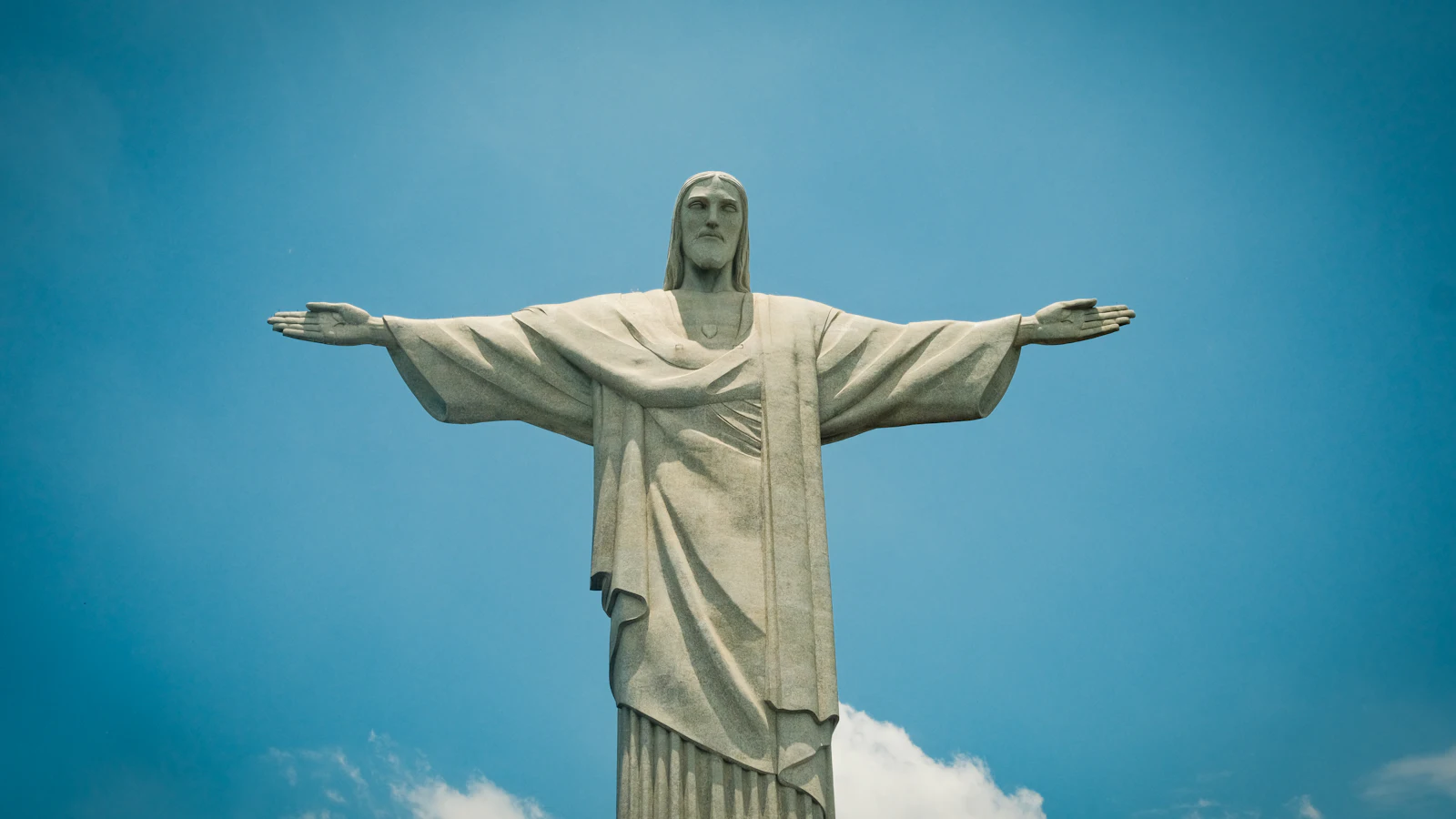
Because the statue faces east, the morning sun lights its front — the face, the outstretched arms, the folds of the robe all catch warm, directional light shortly after sunrise. By late afternoon the sun has swung behind the statue, so from the classic city-facing angles you are shooting into the light and the figure reads as a dark silhouette. Silhouettes can be dramatic on purpose, but if you want the statue itself lit and detailed, the first hour after sunrise is the answer.
Midday is the trap. Rio's summer sun sits nearly overhead, contrast goes harsh, the marble blows out, and the humidity often stacks haze over the city below — the exact view you climbed for. Aim to be on the platform for opening, not at 11am when the tour buses arrive.
There is a constraint worth building the whole plan around. The monument opens at 8am, and sunrise in Rio falls between roughly 5:10 in December and 6:35 in June — always earlier. Sunrise on the summit is not an option that exists for visitors.
What the summit gives you instead is the first hour after opening: still low, still angled onto the statue's face, and far emptier than anything that follows. The genuine dawn frame has to be made from ground level, which is what Dona Marta is for.
Our golden hour viewpoint guide carries a block that recalculates sunrise, sunset and both golden hours for the current date, which is a faster way to plan than a generic almanac.
Getting up there, and what it costs
You cannot drive your own car to the top. Two official routes exist, and the choice affects how early you can be standing on the platform.
- The cog train (Trem do Corcovado) from Rua Cosme Velho 513 — departures every half hour from 8am to 5pm. Around R$134 for an adult on the official site, round trip plus monument entry included. This is the one to book if you want the first slot of the day.
- Official vans from Paineiras — roughly R$100–130 including entry. Vans from Copacabana and Largo do Machado run from about 7am to 4pm; from the Paineiras visitor centre, about 7:30am to 6pm.
Book a timed slot ahead in high season. The monument itself is open daily from 8am to 6pm, and the last useful light for the statue's face has gone long before closing.
Budget for the transfer, not just the ride. Between the queue at Cosme Velho, the climb, and the walk up the final steps, the gap between your ticket time and your first frame is comfortably half an hour. PlanRio keeps the current timetables for both routes.
Beat the crowds or lose the shot
The viewing platform at the summit is compact and it fills fast. By mid-morning you are working around a shifting crowd of several hundred people, all trying to frame the same arms-wide photo. Two ways to keep your foreground clean:
- Arrive for the first entry of the day, ideally on a weekday. The first 30–45 minutes are the calmest the platform gets.
- Shoot upward and tight. A wider lens low to the base, angled up past the arms into open sky, crops the crowd out entirely and exaggerates the statue's scale.
What you cannot bring up: drones and tripods
Corcovado sits inside restricted airspace. Launching a drone anywhere on the mountain needs government clearance, and tourists do not get it by asking nicely at the gate — this is one of the few places in Rio where the answer is a flat no rather than a permit process.
The rest of Brazil is more workable. Anything over 250 g has to be registered with ANAC's SISANT system, flights are capped at 120 metres, and you keep 30 metres from uninvolved people. The current ANAC rules are worth reading before the trip rather than at the airport.
Tripods are the other thing to leave behind. Large bags and tripods are not permitted on the viewing platform, and the platform is too crowded to use one after the first half hour regardless of policy.
Plan around it instead of fighting it. Shooting handheld at opening, with morning light doing the work, is exactly the situation this monument is built for — and the tripod shot you actually want, the one with the city in frame, happens at Dona Marta where nobody stops you.
The viewpoint most visitors miss: Mirante Dona Marta
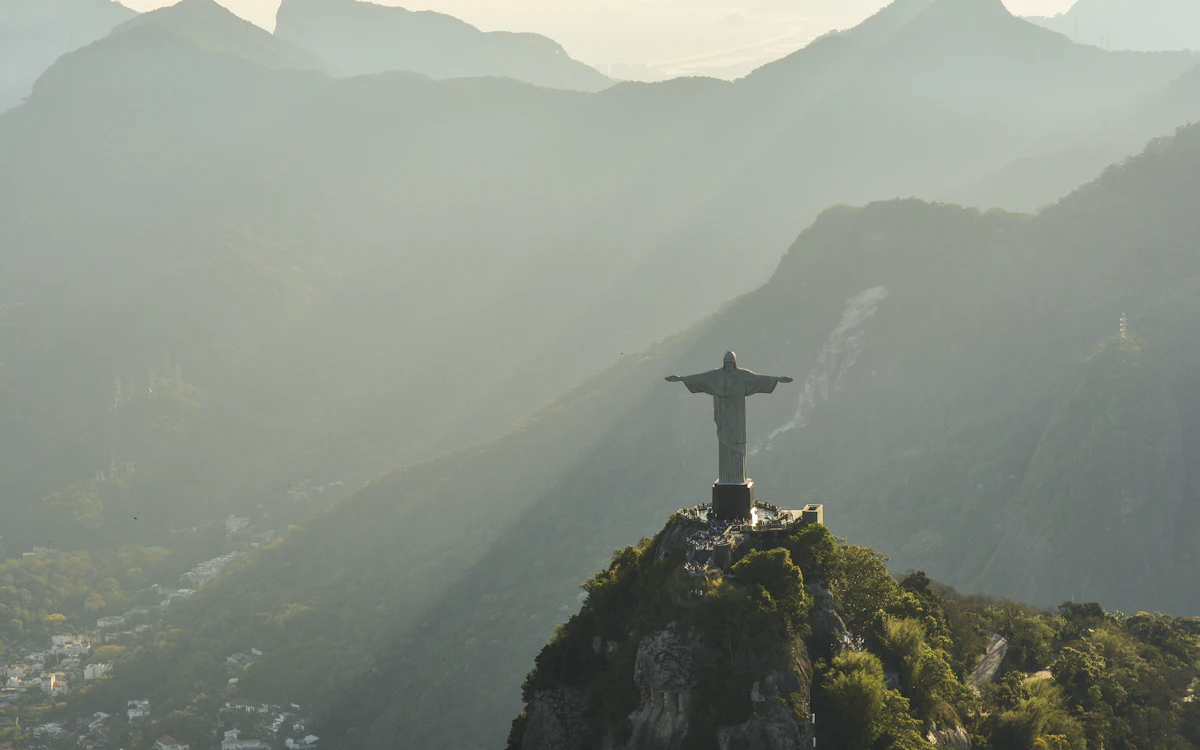
If your goal is Christ the Redeemer in Rio — the statue, Sugarloaf, Guanabara Bay and the beaches in one frame — the summit is the wrong place. You are standing on the statue; you cannot see it in context. The better photograph is made from across the valley at Mirante Dona Marta, an elevated belvedere with a clean, unobstructed line to Corcovado.
From Dona Marta at sunrise you get the statue catching first light on its eastern face, Sugarloaf to the side, and the city waking up below — the kind of layered, establishing shot that a summit selfie can never be. It is reachable by road (taxi or tour van), it is far quieter than the summit at dawn, and it works in both directions: sunrise for warm front-light on the statue, or blue hour for the city lights.
A simple frame that always works from Dona Marta
- Put the statue on a third, not dead centre.
- Let Sugarloaf and the bay fill the opposite third for depth.
- Expose for the sky during golden hour; let the foreground hills fall a little darker.
- If there is morning mist in the valley, shoot it — low cloud between you and Corcovado separates the layers and adds scale.
Weather is the other half of timing
Rio's light changes fast. A flat grey dawn can break into gold within twenty minutes, and a clear afternoon can haze over by three. Build slack into the plan: get in position early, be ready before the light arrives, and be willing to wait. The best frames of Christ the Redeemer almost always come in the narrow windows around sunrise — clear enough to see the statue, warm enough to shape it, early enough to have the space to yourself.
If you would rather have those windows planned for you — access sorted, viewpoints timed to the light, and someone who knows which gate opens first — that is exactly what a private photo session in Rio is for. And for more location notes across the city, the rest of our field notes cover the spots, the light and the timing one frame at a time.