Locations ·
Photographing the Selarón Steps in Rio
The Escadaria Selarón is not just a staircase; it is a 250-step mosaic of global culture and colour that has become one of the most photographed spots in Rio de Janeiro. Built by the Chilean-born artist Jorge Selarón from 1990 until his death in 2013, it is covered in more than 2,000 tiles collected from over 60 countries. Set between the Lapa and Santa Teresa neighbourhoods, it draws a near-constant crowd — which is exactly why a good photo takes more than pointing a camera at the tiles. This guide covers the light, the timing, the composition and the crowd management that separate a sharp, striking frame from another washed-out snapshot.
Understanding the light and best times to shoot
Light is the single most important variable here. The staircase runs uphill and its sections catch very different sun through the day: the upper end toward Santa Teresa often stays shaded in the early morning, while the lower end in Lapa can take harsh, direct sun by midday. That uneven illumination creates high-contrast scenes that easily blow out the bright tiles or crush the shadows in the grout lines.
The golden hour — roughly 6:00 to 8:00 AM — gives the most flattering light on the whole structure. Low, soft, directional sun brings out the texture of the ceramic without harsh shadows, and the warm tone complements the reds, oranges and yellows that dominate the mosaic. Just as important, early morning is when the steps are least crowded. If you miss it, late afternoon from about 4:30 to 6:00 PM is the next best window, though the light is warmer and more intense.
Avoiding midday harshness
Between about 11:00 AM and 3:00 PM the overhead sun flattens the mosaic and washes out its depth. Glare on the glossy tiles causes flare and kills contrast. If you must shoot then, a circular polarising filter cuts the glare and restores colour saturation, and shooting from the top looking down uses the surrounding buildings for a little shade.
- Shoot between 6:00 and 8:00 AM for soft, even light across all 250 steps and the thinnest crowds.
- Avoid 11:00 AM–3:00 PM to prevent harsh shadows and blown-out highlights.
- Use a circular polariser to cut glare off the glossy ceramic tiles.
- Watch the forecast — an overcast day acts like a giant softbox and evens everything out.
Composition strategies for the mosaic
The steps are a dense visual puzzle of tiles from more than 60 countries, so framing the whole staircase in one shot often reads as cluttered. Instead, pick out specific sections or motifs — the hand-painted panels, the recurring red tiles Selarón signed, or a tight run of pattern. Isolating one element makes a far stronger image than trying to hold all 250 steps at once.
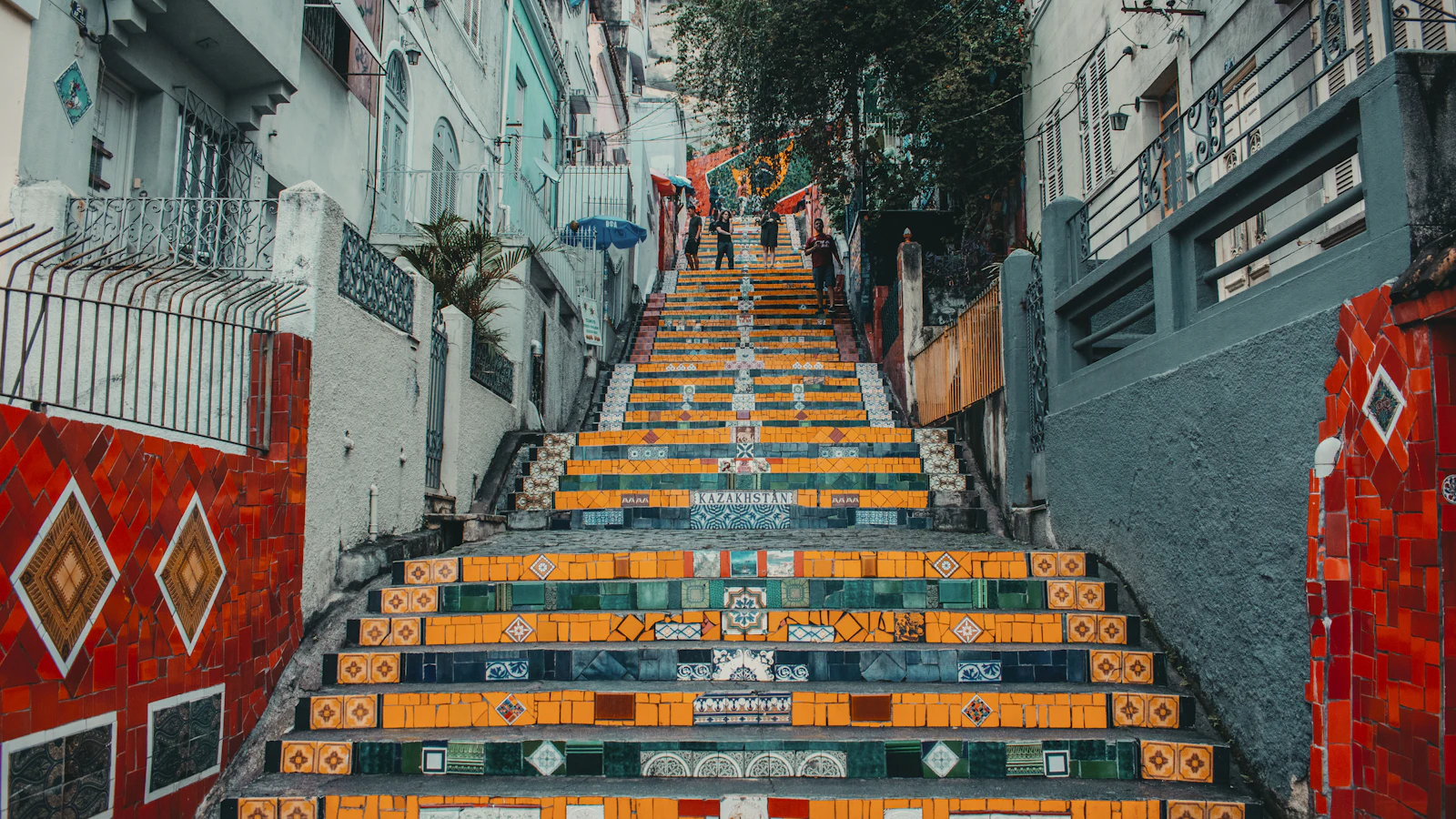
Leading lines are your best tool. The staircase itself is a powerful line: stand at the base and shoot up to emphasise height and grandeur, or shoot down from the top to capture the sweep and add depth. A wide-angle lens (16–24mm) captures the breadth while keeping context.
Shooting the tiles close-up: details and texture
Close-up frames reveal what the wide shots miss: the wear from decades of foot traffic, the individual patterns, and the subtle colour shifts from tile to tile. Look for juxtapositions — a bright blue tile beside a faded red one, a smooth surface against a cracked one. Those contrasts carry the staircase's history and give an image emotional weight. If you are building a wider Rio set, our guide to the best viewpoints in Rio pairs well with a close-in landmark like this.
Managing crowds and people in the frame
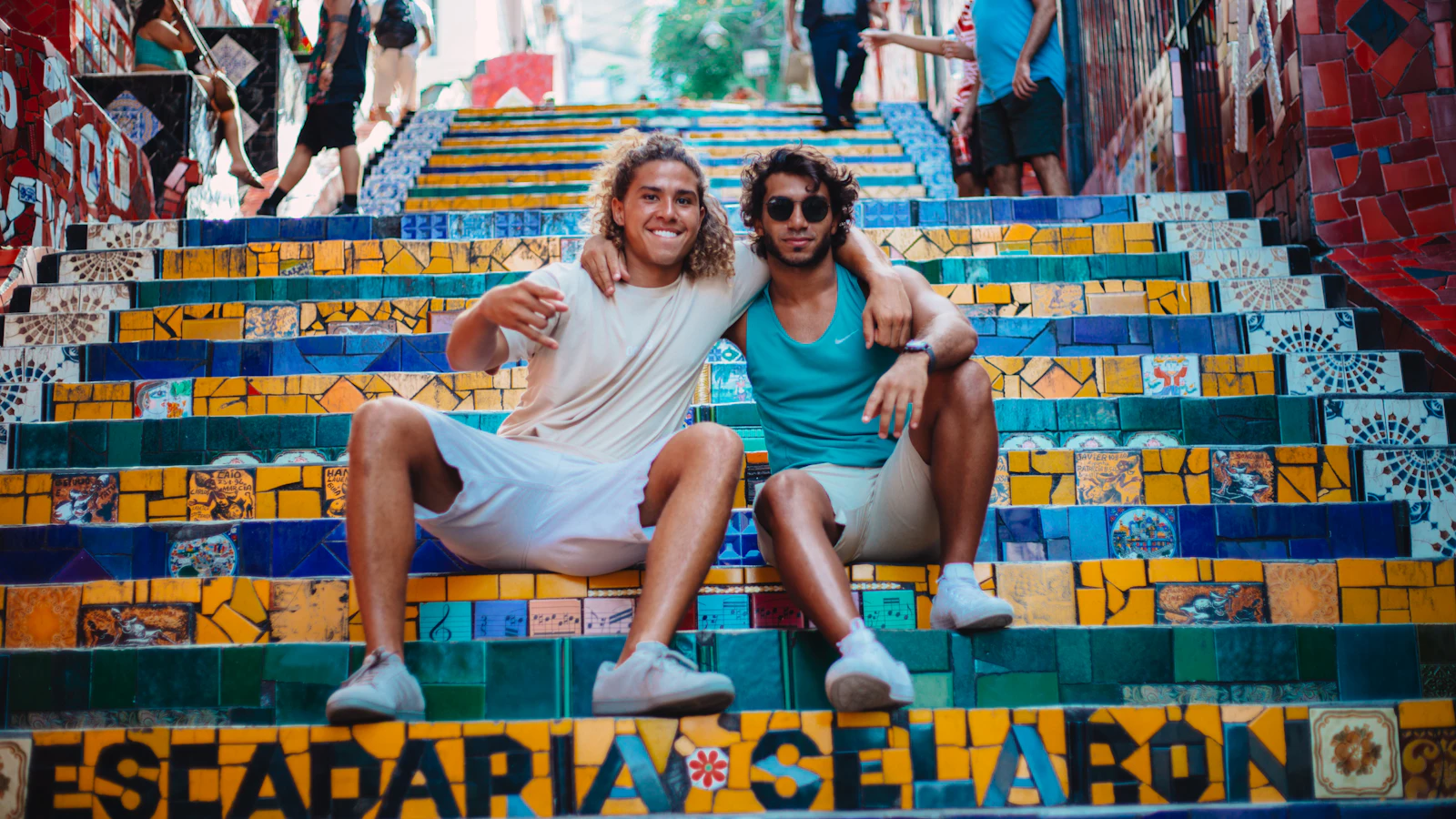
The Selarón Steps are busy from dawn to dusk. That constant movement can wreck a clean shot — or become an asset. The first decision is whether to include people for scale and life, or exclude them for a clean architectural frame.
To use the crowd, set a slower shutter (around 1/15 to 1/30 second) on a steady camera: moving people blur while the tiles stay sharp. It works best when foot traffic is lighter, early morning or midweek. To freeze a candid moment instead, use 1/250 second or faster and look for someone genuinely engaged with the steps rather than just passing through.
Excluding people
For clean, people-free frames, patience is everything. Compose so the background is all tiles and wait for a gap in the flow — during peak hours that can take several minutes. Shooting from a higher vantage near the top lets you frame out the busier lower steps, and a longer focal length (50–85mm) isolates a section and minimises stray tourists.
Gear and camera settings
A camera with good dynamic range helps most, because of the hard contrast between bright tiles and dark grout. A wide-angle zoom (16–35mm) captures the full staircase; a standard zoom (24–70mm) covers both wide frames and details. A tripod earns its weight in low light or when using slow shutter speeds to blur crowds.
Shoot manual for full control. Start around f/8–f/11 for sharpness across the frame, keep the shutter fast enough to avoid shake (1/125 second or faster handheld), and shoot RAW so you can recover detail in the shadows and highlights later — essential in such a high-contrast scene. A polariser and a lens cloth are the two accessories worth carrying, since the dusty, high-traffic setting smears glass fast.
Post-processing tips
Editing is where these frames come together. Lift the exposure and contrast to open the shadows and rein in the highlights, then use clarity and texture sparingly to define the tiles without adding noise. In colour, the mosaic is already saturated, so boost vibrance selectively — the reds, blues and yellows — and stop before it looks unnatural. The HSL panel lets you tune each colour on its own: darkening the blues to make them pop, or lifting the yellows for contrast. Finally, crop out distractions at the edges, straighten so the steps sit level, and sharpen gently.
Frequently asked questions
What is the best time of day to photograph the Selarón Steps?
Early morning, roughly 6:00 to 8:00 AM. The light is soft and even, and the crowds are at their thinnest, which makes both exposure and clean composition far easier. Late afternoon is the second-best window for warmer, more dramatic light.
Can I use a tripod at the Selarón Steps?
Yes, tripods are allowed, but the steps are narrow and busy, so a full-size tripod can be awkward at peak times. Use one mainly in low light or from a less crowded spot near the top, and be considerate of other visitors and passers-by.
What lens is best for the Selarón Steps?
A wide-angle lens (16–35mm) captures the full sweep of the staircase, while a standard zoom (24–70mm) is versatile for both wider frames and detail shots. A short telephoto (50–85mm) helps isolate sections and keep stray tourists out of the frame.
How do I deal with crowds in my photos?
Either embrace them with a slow shutter to blur movement, or wait for a natural gap in the flow. Coming early or midweek helps most, and shooting from a higher vantage near the top lets you frame out the busiest lower steps.
Final word
Photographing the Selarón Steps rewards timing and patience more than expensive gear. Come at first light, work the leading lines, manage the crowd deliberately, and protect your glass from the dust — do that and you will leave with frames that capture why this staircase became a Rio icon. For hours and getting-there details, the official Visit Rio tourism site is a reliable reference, and the rest of our Rio photo guides map out where to point the camera next.