Locations ·
Vista Chinesa Viewpoint: How to Visit and Shoot It
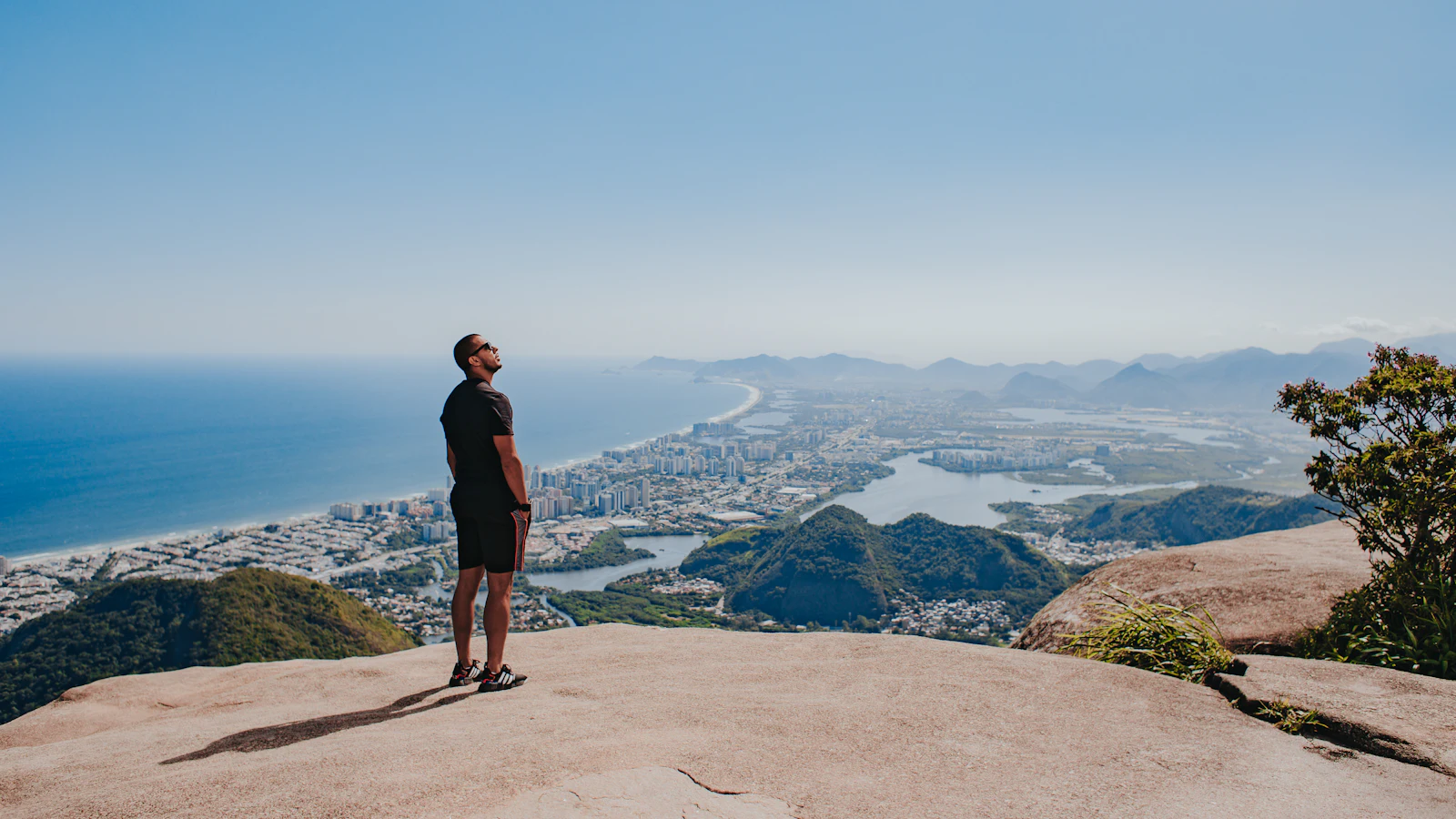
Vista Chinesa — the "Chinese View" — is the most photogenic of Tijuca Forest's belvederes: an oriental-style pavilion high above Rio, looking straight down over the Lagoa, the beaches and Corcovado. It's free and open to the sky; the only real trick is getting up there.
What Vista Chinesa is
Vista Chinesa is a small pagoda-style gazebo (a mirante, or belvedere) perched around 380 metres up on the forested slopes of the Tijuca massif, in the Alto da Boa Vista. The oriental design — upturned eaves painted red and green — dates to 1903 and nods to the Chinese tea workers brought to Rio in the early 1800s. You don't come for the building so much as for what it frames: an uninterrupted sweep over Lagoa Rodrigo de Freitas, Ipanema and Leblon, with Corcovado and the Christ statue to one side and Pedra da Gávea on the horizon.
Why it's called the "Chinese View"
The name is a piece of Rio history that has nothing to do with the view itself. In the early nineteenth century, when the Portuguese court had relocated to Rio, Chinese labourers were brought over to establish tea cultivation on the royal estate that is now the Jardim Botânico. The plantations failed, but the association stuck to the hillside above them. The pavilion you see today was raised in 1903, during the great remodelling of Rio under mayor Pereira Passos, as a deliberately exotic ornament on the new forest road — a belvedere built to be looked at as much as to look from.
That makes Vista Chinesa unusual among Rio's viewpoints: Sugarloaf and Corcovado are natural features with infrastructure bolted on, while this one is a designed object, placed exactly where a nineteenth-century eye decided the city looked best. It was right.
How to get to Vista Chinesa
This is the part most guides skip. The viewpoint sits on the Estrada da Vista Chinesa inside the national park, and there is no direct public transport, so there are three realistic ways up:
- Taxi or ride-hailing (Uber / 99) — the simplest option. Come from the Jardim Botânico or Lagoa side and ask the driver to wait, since it's hard to get a car back up in the forest.
- By car — a short, winding drive up through the trees, with roadside parking at the pavilion. Pair it with the nearby Mesa do Imperador, another terrace viewpoint a couple of minutes further on.
- By bicycle — the climb from Jardim Botânico is a Rio road-cycling classic: steep, shaded and about 8 km, for fit riders only.
From Copacabana or Ipanema, reckon on 25–35 minutes by car outside rush hour; from Centro, closer to 45. The last stretch is single-lane, hairpinned and shared with cyclists, so it takes longer than the distance suggests.
The cyclists' climb
If you ride, this is one of the celebrated ascents in Brazil. The road from the Jardim Botânico gate up to the pavilion runs roughly 8 km through closed forest, with sustained double-digit ramps in its middle section, and it was used in the Rio 2016 Olympic road race, which sent the men's peloton over Vista Chinesa repeatedly on its way to Grumari. Ride it very early: the surface is good, the shade is total, and the traffic is light before about 8:00. Bring more water than the distance implies — the humidity does the damage, not the gradient.
Opening hours, cost and safety
- Cost — nothing. It's an unfenced public belvedere with no ticket and no attendant.
- Hours — the pavilion itself isn't gated, but the Tijuca National Park sector roads that reach it operate on daytime hours, generally opening around 8:00 and closing in the late afternoon. Times shift by sector and season, so confirm on the day rather than planning a late shoot around a road that may already be shut.
- Safety — the viewpoint is popular and open, but the forest roads around it are quiet, and quiet is the relevant risk factor in Rio. Visit in daylight, preferably not alone, keep camera bodies and phones out of sight on the way up, and have your car wait rather than walking out. Don't leave anything visible in a parked car.
Go in daylight and ideally not alone. As anywhere in Rio, discretion on the approach matters more than anything you do at the viewpoint itself.
The view, left to right
Stand at the pavilion facing out and the city arranges itself in layers:
- Below you, filling the middle of the frame — Lagoa Rodrigo de Freitas, the lagoon ringed by apartment blocks, with the Jockey Club and the Jardim Botânico on its near shore.
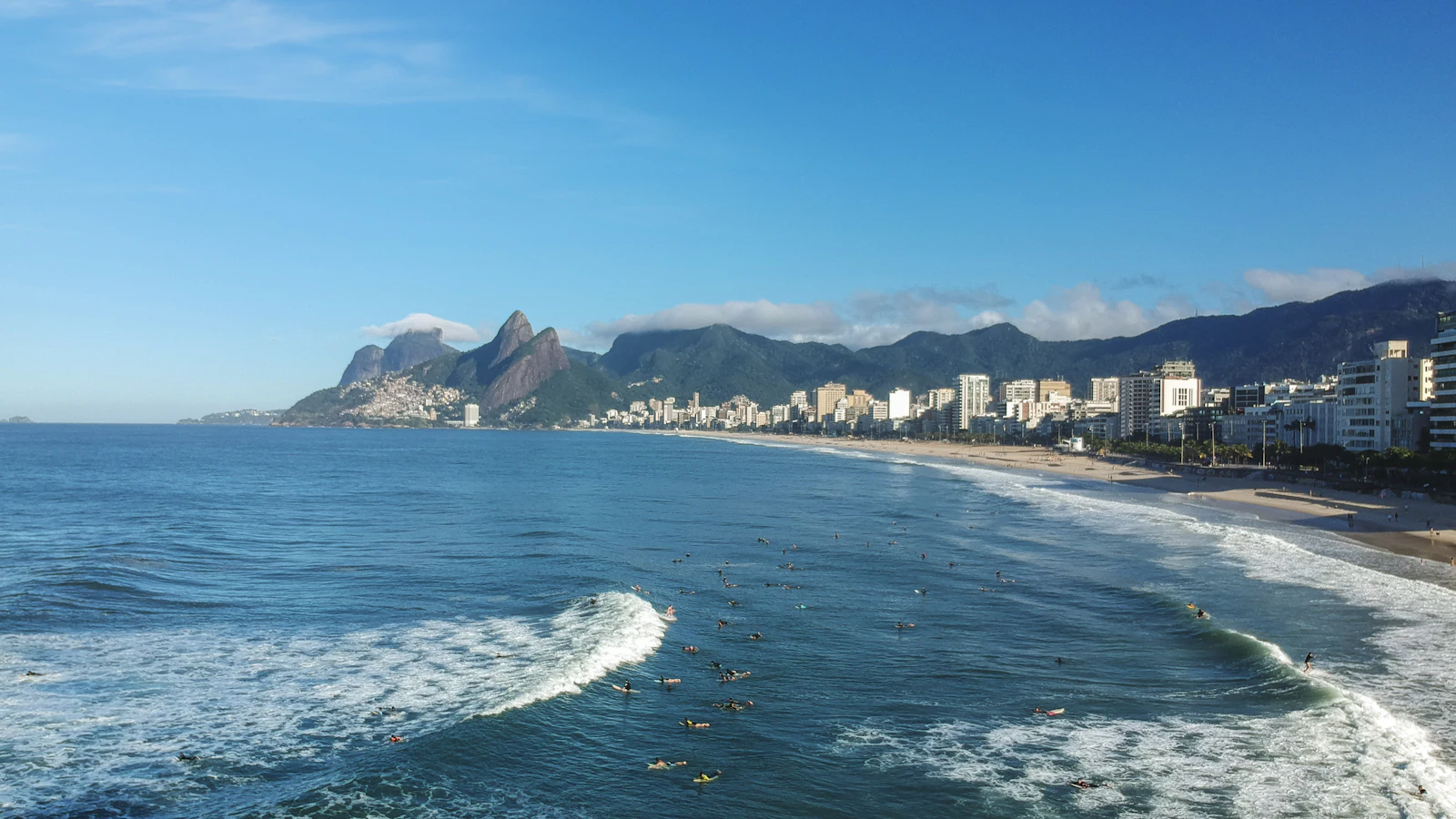
- Beyond the Lagoa — the strip of Ipanema and Leblon, then the Atlantic. On a clear day you can pick out the surf lines.
- Right, closing the view — the granite of Corcovado with the Christ statue on top, side-lit in the late afternoon and often the best single element in the composition.
- Far right and behind — the flat-topped bulk of Pedra da Gávea, and the twin cones of Dois Irmãos where Leblon ends.
- Left, further out — the hills toward Botafogo, with Sugarloaf sometimes just visible in the gap depending on where you stand along the terrace.
When to shoot it
The pavilion faces roughly east-southeast, and that single fact decides your whole plan.
- Sunrise gives you the clearest air of the day, but the sun comes up over the ocean more or less into your lens. Expect backlight, haze and silhouettes rather than a lit city — beautiful, but a different photograph from the postcard.
- Late afternoon into golden hour puts the sun behind and to your right, throwing warm frontal light across Corcovado, the Lagoa and the beaches. This is the light that makes the classic Vista Chinesa frame, and it's the reason to accept a hazier atmosphere.
- Midday is the one to skip: flat light, blown highlights on the sand, and the deepest contrast between bright water and black forest.
Season matters as much as hour. Rio's winter, roughly May to September, is drier and gives the crispest long-distance visibility; the summer months from December to March are humid, hazier, and prone to cloud building over the massif by early afternoon — which frequently swallows the viewpoint entirely. If you have one clear winter afternoon in Rio, spend it here.
Getting the exposure right
The technical problem is dynamic range: bright ocean and sand against forest foreground in deep shade. Practical answers, in order of preference:
- Expose for the highlights and lift the shadows in post — modern sensors have the latitude, and blown sand is unrecoverable.
- Bracket two or three frames and blend, which is easy here because nothing in the scene moves.
- A graduated ND filter if you're shooting film or prefer to finish in camera.
- Lens choice — something wide (24–35mm equivalent) takes the whole sweep including the pavilion's eaves as a frame; a short telephoto (85–135mm) isolates Christ the Redeemer or a single beach, and is the shot most people forget to take.
- Use the pavilion. Shooting out through the arches, with the red-and-green eaves at the top of the frame, is what distinguishes a Vista Chinesa photograph from any other Rio panorama.
Vista Chinesa or another viewpoint?
- Vista Chinesa — the best combination of an unusual foreground and a full city panorama, free, and reached by car in half an hour. Weakness: you need transport, and the forest can cloud over.
- Mesa do Imperador — two minutes further along the same road, a stone picnic terrace with a wider, flatter framing of the Lagoa and no pavilion. Do both in one stop; they are not an either/or.
- Mirante Dona Marta — closer to the city, easier to reach, and better for the Sugarloaf-and-Botafogo composition rather than the Lagoa one.
- Corcovado — higher and more comprehensive, but ticketed, crowded, and you cannot photograph the Christ statue from it, since you're standing at its feet. Vista Chinesa is where you shoot the statue.
Combine it with the rest of Tijuca
Vista Chinesa is one stop on a forest loop, not a destination on its own. Mesa do Imperador, a stone picnic terrace with another framing of the Lagoa, is minutes away, and the road continues to the waterfalls and trails of the Floresta da Tijuca. Budget half a day and you can take in the pavilion, the Mesa, the Cascatinha Taunay waterfall and a short forest walk without hurrying. For the wider set of city overlooks — Mirante Dona Marta, Sugarloaf, Arpoador — see our guide to Rio's best viewpoints, and time any of them with golden hour.
Frequently Asked Questions
How do you get to Vista Chinesa in Rio?
There's no direct public transport. Most visitors take a taxi or ride-hailing car (Uber / 99) up from the Jardim Botânico or Lagoa side and ask it to wait; you can also drive, with roadside parking at the pavilion, or cycle the roughly 8 km climb if you're fit. Go during the day.
Where exactly is Vista Chinesa?
On the Estrada da Vista Chinesa, in the Alto da Boa Vista sector of Tijuca National Park, on the forested slope above the Jardim Botânico and Lagoa districts of Rio's Zona Sul. It's inside the national park boundary, roughly 380 metres above sea level.
How high is Vista Chinesa?
About 380 metres above sea level — high enough to look down on the whole Lagoa basin and the beaches beyond, but well below Corcovado's 710 metres, which is why the Christ statue appears above you rather than level with you.
Why is it called Vista Chinesa?
It's named for the Chinese labourers brought to Rio in the early 1800s to grow tea on the royal estate below, now the Jardim Botânico. The tea failed, but the name attached to the hillside, and the oriental-style pavilion built there in 1903 made it permanent.
Can you see Christ the Redeemer from Vista Chinesa?
Yes — Corcovado and the statue sit to your right, and this is one of the better places in Rio to photograph the monument itself rather than the view from it. A short telephoto around 85–135mm frames it well, and late-afternoon light hits it from the front.
Is Vista Chinesa worth visiting?
Yes — it's one of Rio's finest free viewpoints, framing the Lagoa, Ipanema, Leblon and Corcovado in a single sweep beneath a distinctive oriental pavilion. Pair it with the nearby Mesa do Imperador to make the trip up worthwhile.
Is Vista Chinesa safe to visit?
It's a popular, open viewpoint, but the forest roads around it are quiet. Visit in daylight, preferably not alone, keep valuables discreet on the way up, and have your taxi or car wait rather than walking back out.
How much does Vista Chinesa cost?
Nothing — it's an open-air public belvedere in Tijuca National Park with no entrance fee. Your only cost is transport up to it.
What's the best time to visit Vista Chinesa?
Late afternoon for warm frontal light on Corcovado and the beaches, or early morning for the clearest air and a backlit, hazier scene. Skip the middle of the day. Across the year, Rio's dry winter months from May to September give the best long-distance visibility.
How long should I spend at Vista Chinesa?
Twenty to thirty minutes covers the pavilion itself, which is why it's worth combining with Mesa do Imperador two minutes away and, if you have the time, the waterfalls further into the Floresta da Tijuca — half a day for the loop.
What can you see from Vista Chinesa?
Lagoa Rodrigo de Freitas directly below, the Ipanema and Leblon beaches beyond, Corcovado and Christ the Redeemer to one side, and Pedra da Gávea, Dois Irmãos and the Atlantic on the horizon.