Locations ·
Santa Teresa and Lapa: A Photographer's Guide
Most of Rio's photography is about the coastline. Santa Teresa and Lapa are the opposite: steep cobbled streets, a rattling old tram, an 18th-century aqueduct and peeling colonial colour, all stacked on a hill above downtown. It's the city's most characterful quarter, and it rewards a photographer who walks slowly. This guide covers how to get up there, when the light is best, the three frames worth planning around — the Bondinho tram, the Arcos da Lapa and the view from Parque das Ruínas — and how to stay safe with a camera.
How to get to Santa Teresa
Santa Teresa sits on a hill directly above Rio's Centro, between downtown and the Lagoa. The most characterful way up is the Bondinho, the historic yellow tram, which leaves from a small station near Carioca metro in the city centre and climbs across the Lapa arches into the neighbourhood — the ride is cheap and is a photograph in itself. A taxi or Uber up the winding streets is quick and easy, and a sensible choice at night or if you're carrying gear. You can also walk up the Escadaria Selarón from Lapa, which puts you at the lower edge of the quarter. For opening times and current fares, the official Visit Rio tourism site is the reliable source.
The Bondinho and the Arcos da Lapa
The yellow Bondinho tram climbs from the edge of downtown up into Santa Teresa, and the ride itself is the picture. It crosses the Arcos da Lapa — a double tier of white stone arches built in the 18th century to carry water down from the hills — and those repeating arches make a powerful leading line whether you shoot them from the tram or from the square below. Come early morning or late afternoon, when the light is warm and side-on; midday flattens the stone. At night the arches are lit and Lapa fills with music and bar crowds, so bring a small tripod and work long exposures for the glow and the movement.
Walking the streets of Santa Teresa
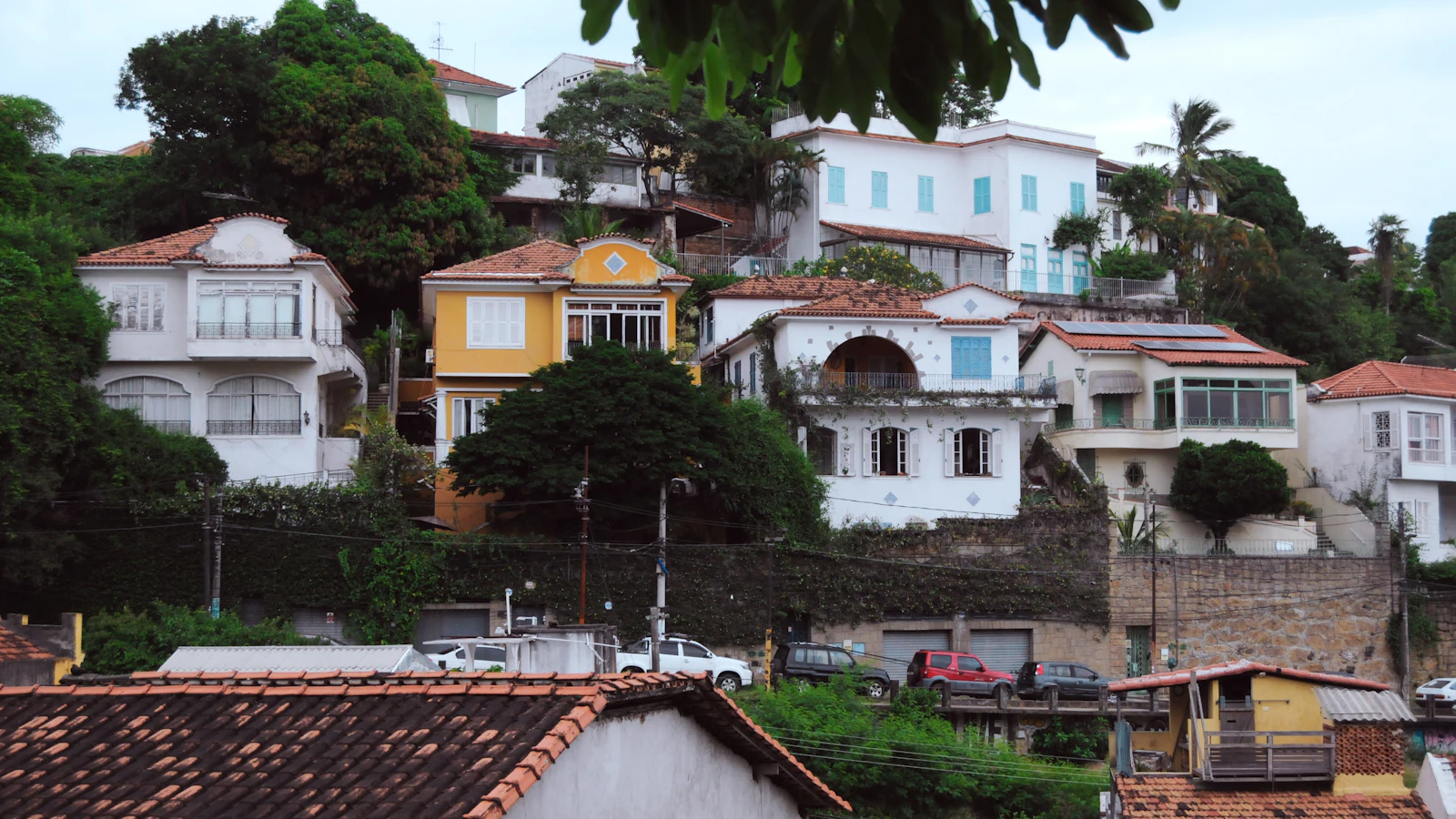
Up the hill, Santa Teresa is the old artists' quarter, and its streets are the draw — steep, cobbled and winding, lined with faded colonial mansions in peeling pastel colour, studios and small hotels, samba drifting from open windows and street art on half the walls. The main artery is Rua Almirante Alexandrino, which snakes through the neighbourhood following the tram line and strings together its two hubs: Largo do Guimarães, the lively heart with cafés, bars and restaurants around the tram stop, and the quieter, leafier Largo das Neves. Wander between them on foot — this is detail territory: peeling doors, wrought-iron balconies, plants spilling over walls, a mural around every bend, a cat asleep in the sun. Look for frames within frames, shoot through arches, doorways and windows for depth, and let the low light rake along the narrow streets late in the day. People and their daily rhythm are half the story, so photograph them, but ask first on the residential lanes.
The Escadaria Selarón sits right on the Lapa–Santa Teresa border and deserves its own visit — we cover shooting its tiles in a separate guide, so fold it into your walk rather than rushing it here.
The view from Parque das Ruínas
For the wide shot, climb to Parque das Ruínas, in the heart of Santa Teresa — the shell of a 19th-century mansion, now an open terrace looking out over the rooftops to Guanabara Bay, Sugarloaf and, on a clear day, Christ the Redeemer. The overgrown ruins in the foreground and the city beyond make a natural layered composition. It pairs well with the city's other viewpoints if you're building a day around Rio's skyline.
Best time to visit and photograph
Come for the ends of the day. Early morning gives you empty streets, side-on light raking across the pastel façades, and the calmest atmosphere for photographing residents' daily rhythm. Late afternoon into the golden hour warms the stone of the arches and lights the view from Parque das Ruínas; then, as the sky darkens, Lapa comes alive with music and the lit arches, which is prime tripod-and-long-exposure territory. Midday is the weakest window — the narrow streets go harsh and contrasty, and the hill offers little shade. Weekday mornings are quietest; Friday and Saturday nights are when Lapa's bars and street parties peak, lively for photography but the time to be most careful with your gear.
Gear and staying safe
- Wide-angle (16–35mm) for the tram, the arches and the tight streets; a longer lens for compressing the rooftops from Parque das Ruínas.
- A small tripod for Lapa's arches after dark — long exposures keep the noise down and catch the light trails.
- Shoot the good light early or late; the hill's narrow streets go harsh and contrasty under midday sun.
- Keep gear discreet. Santa Teresa and Lapa are wonderful but Rio has real petty theft — carry a plain bag, don't flash expensive kit on quiet streets, and be extra aware after dark in Lapa.
Give it an unhurried afternoon into evening: the tram and streets in warm light, the ruins at golden hour, then down into Lapa as the arches light up. It's the part of Rio that photographs least like a postcard and most like a place people actually live.
Frequently Asked Questions
How do I get to Santa Teresa in Rio?
The classic way is the Bondinho, the yellow historic tram, which leaves from a station near Carioca metro in the city centre and crosses the Lapa arches on its way up. A taxi or Uber is faster and the safer choice after dark, and you can also walk up the Escadaria Selarón from Lapa to reach the lower edge of the neighbourhood.
Is Santa Teresa safe for photographers?
Santa Teresa and Lapa are rewarding but Rio has real petty theft. Keep your kit in a plain bag, don't flash expensive gear on quiet streets, shoot the main lanes and viewpoints in daylight, and be extra aware in Lapa after dark. Take a taxi or Uber rather than walking down the hill at night.
What is the best time of day to photograph Santa Teresa and Lapa?
Early morning for empty streets and raking light, and late afternoon into golden hour for the warm stone of the arches and the view from Parque das Ruínas. After dark, the lit Arcos da Lapa are best worked on a tripod with long exposures. Avoid harsh midday light.
What is there to photograph in Santa Teresa?
The three signature frames are the yellow Bondinho tram, the 18th-century Arcos da Lapa arches, and the rooftop-to-bay view from Parque das Ruínas. Between them, the neighbourhood's cobbled lanes, colonial mansions, street art and the nearby Escadaria Selarón give endless detail shots.
What are the streets of Santa Teresa like?
Steep, cobbled and winding, lined with colourful colonial mansions, artists' studios and street art. The main street is Rua Almirante Alexandrino, which follows the tram line and links the two squares — the lively Largo do Guimarães and the quieter Largo das Neves. It's a neighbourhood best explored slowly on foot.