Locations ·
Copacabana & Ipanema Beach Photography Guide
Golden-hour light raking across the rocks at Arpoador is the shot that defines Rio de Janeiro's coastline. Photographers gather on these two beaches not just for the water, but for the play between the city's architecture and its natural setting. Capturing that energy takes more than a camera; it asks for an understanding of light, timing and the local rhythm. This guide breaks down the specific spots and techniques for iconic frames without the tired clichés. For the wider picture of the city's light, pair it with our guide to Rio at golden hour.
Where and when to shoot the beaches
Golden Hour at Arpoador
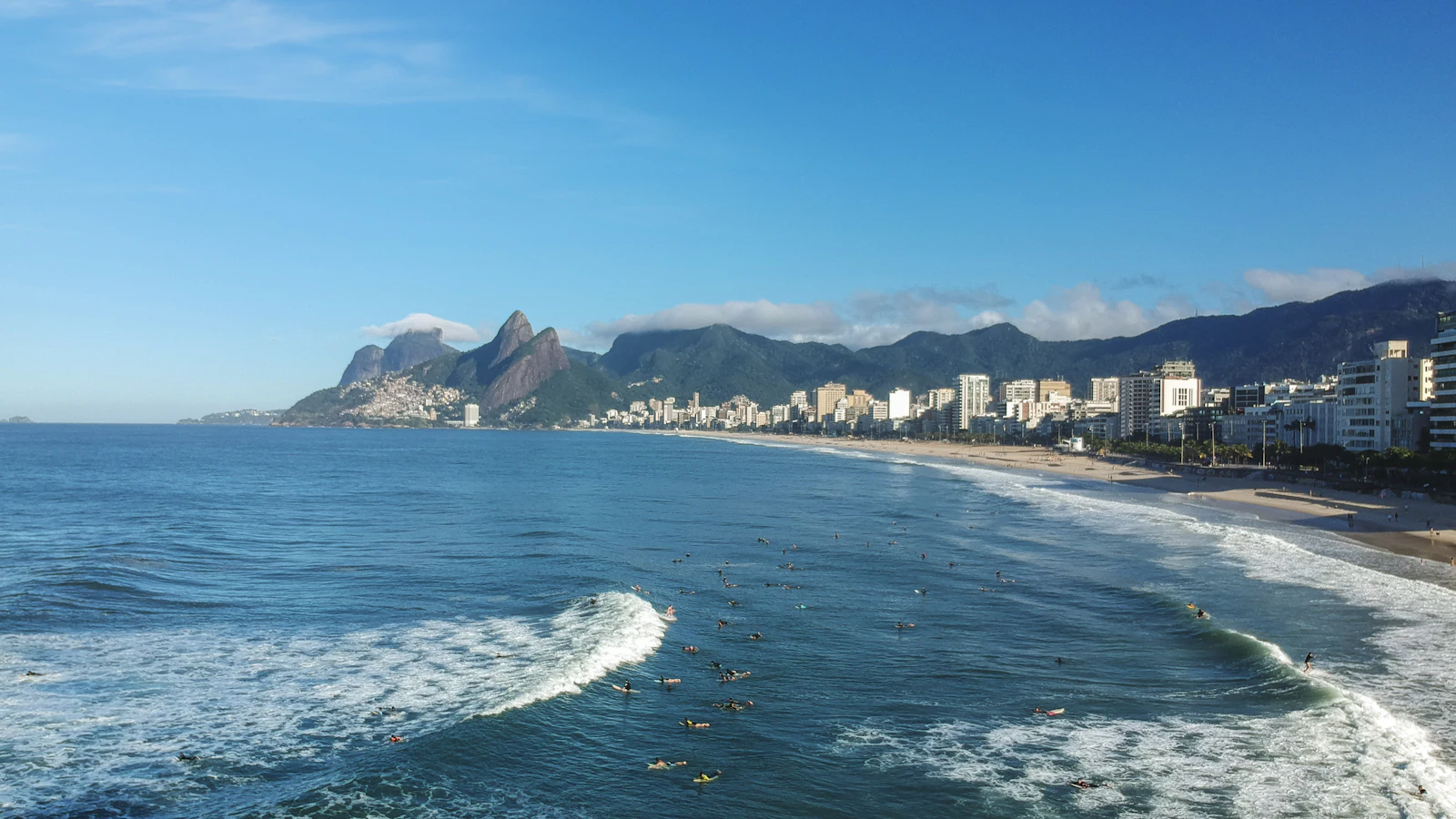
The Pedra do Arpoador is the rocky point at the far end of Ipanema, right where it meets Copacabana, and it is arguably the most-photographed sunset spot in Rio. It faces west toward the twin peaks of Dois Irmãos and Leblon, so on a clear evening the crowd gathers on the rock and, by tradition, applauds as the sun drops behind the hills. To work it well, arrive at least 45 minutes before sunset. The light changes fast, and the best frames come when the sun is low enough to cast long shadows but still lighting the rock and the sea.
Composition here leans on leading lines. The tide pools and worn granite at the base of the point make natural foreground for the silhouette of Dois Irmãos beyond. Set your camera low, near the water's edge, to play the rock against the sky, and use a wide-angle lens such as a 24mm or 16mm to hold both the point and the surf. Patience is the key: wait for a wave to break against the base and throw up a mist that adds texture and drama.
Avoid shooting straight into the sun unless you want a deliberate flare. Instead, keep the sun slightly to the side so it rakes the texture of the rock while the sky holds a workable blue or orange. That protects your highlights and keeps detail in the shadows.
- Arrive 45 minutes before sunset to claim a spot on the point before the crowd fills in.
- Use a polarising filter to cut glare on the wet rock and the water.
- Shoot RAW to recover shadow detail later.
- Keep a lens hood on to shield the glass from wave spray.
Arpoador gets busy, especially at weekends and near sunset. To isolate a subject, try a slower shutter to blur people moving through the background; around 1/15s is often enough to smear the motion while keeping the rock sharp, turning a crowded scene into something calmer and more timeless.
Capturing the Energy of Posto 9 in Ipanema
If Arpoador is about stillness and drama, Posto 9 in Ipanema is about movement and colour. This stretch of sand is known for its lively crowd, with beach-volleyball and footvolley courts, pickup games and vendors making a busy backdrop. The challenge is to catch that energy without letting the frame turn cluttered.
The best light at Posto 9 is mid-morning, around 10:00 AM, when it is bright and even and picks out the colours of umbrellas, kangas and swimwear. A prime lens such as a 50mm or 85mm compresses the background and isolates a moment: a player diving for a ball, a vendor stacking fruit, a group of friends laughing. Look for natural frames — the arc of a volleyball net, the curve of a beach chair — to guide the eye, and fill the frame with action rather than empty space.
Toward Arpoador you also get the classic backdrop of Dois Irmãos closing off the beach. Shooting from a distance with a short telephoto lets you stack that silhouette behind the action and clean up the crowd, or you can come early, before the sand fills, for a simpler frame.
The Copacabana Promenade and Blue Hour
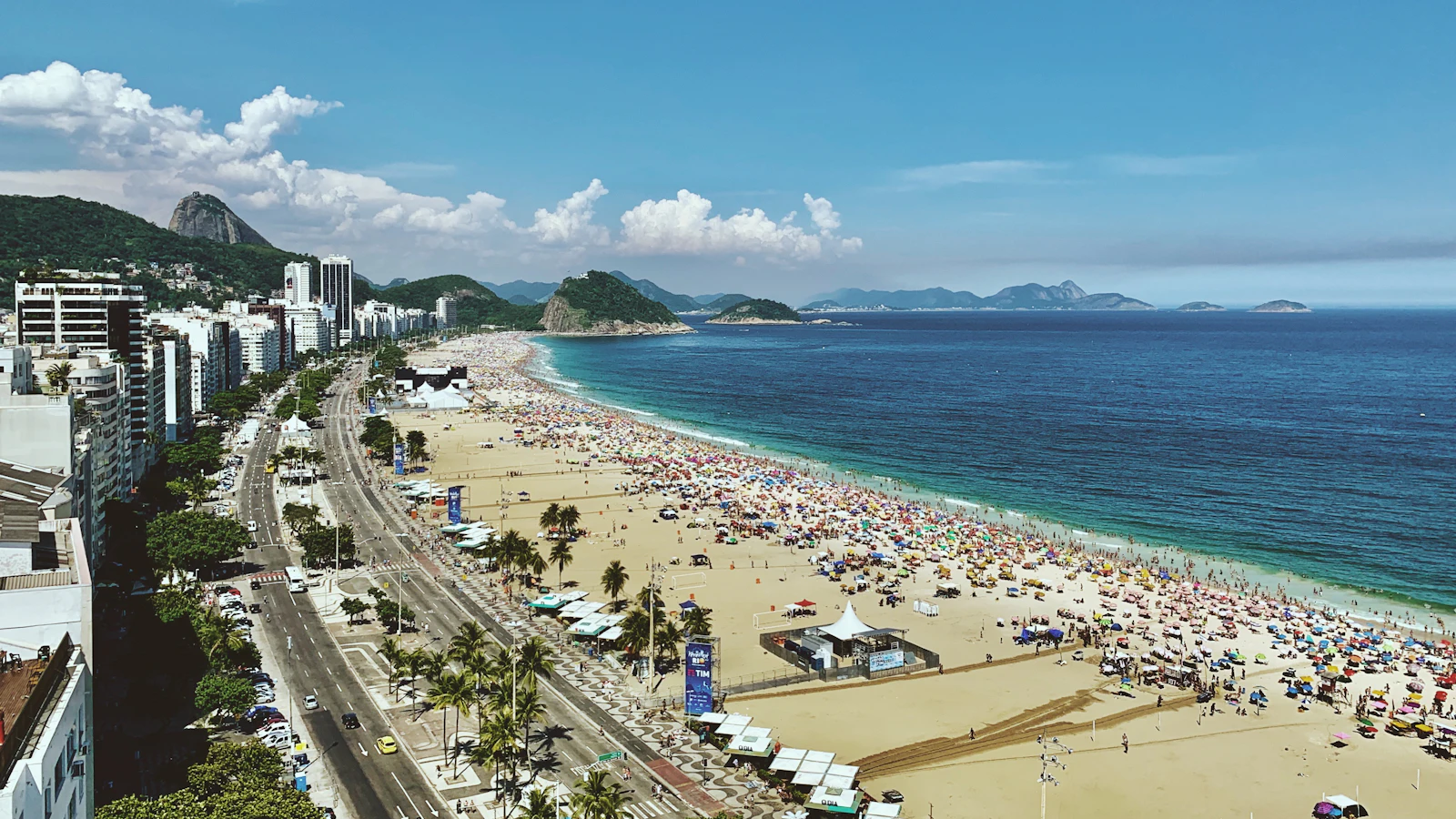
Copacabana's beachfront promenade — the calçadão, laid with the black-and-white wave pattern designed by landscape architect Roberto Burle Marx — is one of the city's signature graphic subjects. It works best during the blue hour, the stretch just after sunset when the sky deepens and the streetlights come up.
To shoot the wave pattern, find a raised spot such as the steps at a beach kiosk and use a wide-angle lens to run the mosaic into the distance. The contrast between the dark stone and the pale sand makes a strong visual rhythm, and converting to black and white leans into the geometry. The long avenue running parallel to the beach gives a firm horizontal line to draw the eye in; a tripod helps in the low light of blue hour, where you may need 1/60s or slower.
The mid-century apartment blocks lining both beaches add clean lines and bold shapes. Watch for reflections of the sky in their windows, which layer depth into a composition and pair the solid facades with the changing light overhead.
Copacabana and Ipanema From Above
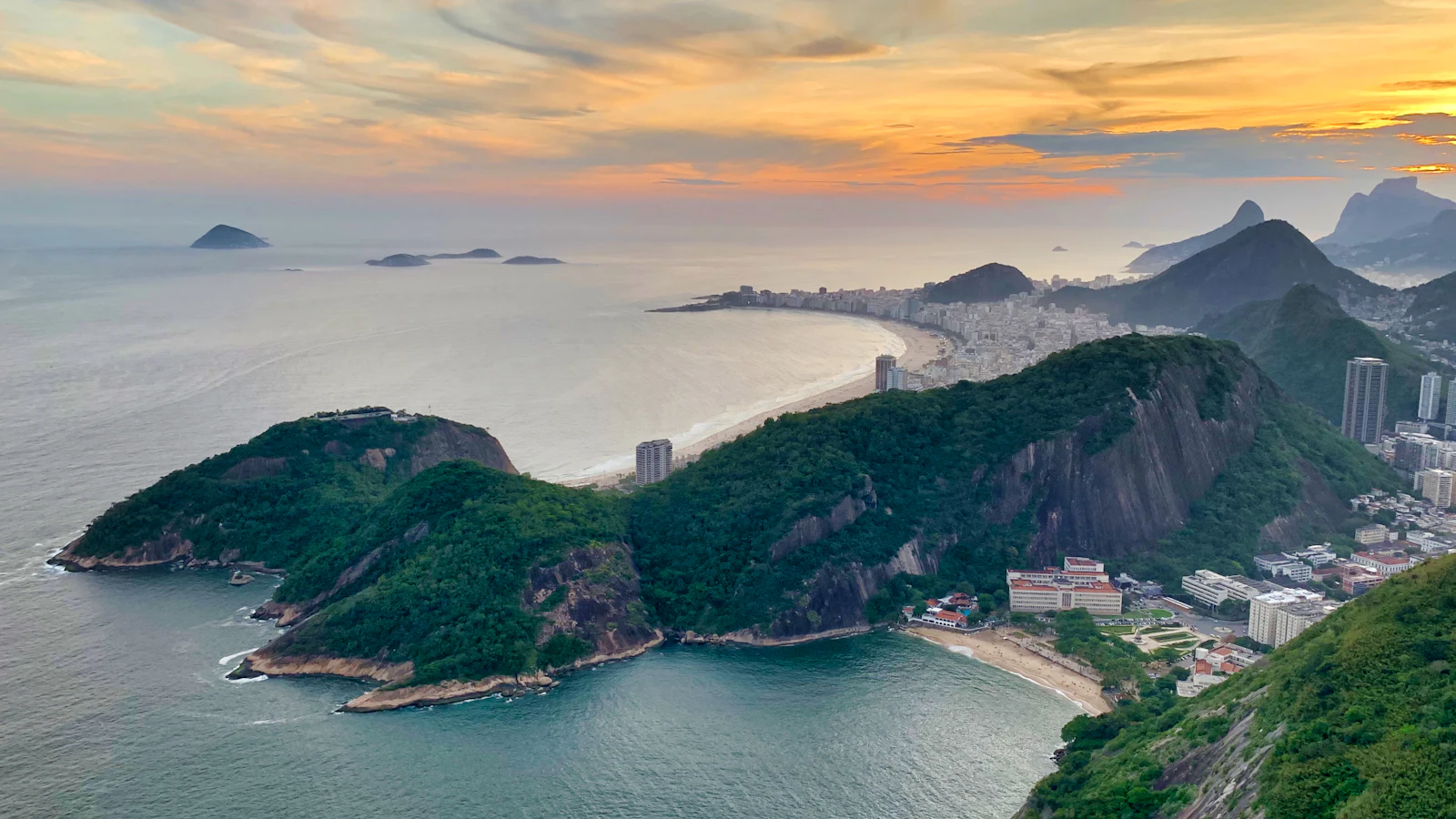
The frame most people picture before they arrive is the aerial one: both beaches curving away in a single sweep, the apartment blocks packed behind them, Dois Irmãos and Sugarloaf bracketing the coastline. You do not need an aircraft for it — Rio's hills sit close enough to the sand that a short climb or a lift ride gets you most of the way there.
Morro Dois Irmãos, reached by the trail from Vidigal at the Leblon end, is the strongest of them: from the top the whole Leblon–Ipanema–Copacabana coastline runs out below you with the Lagoa behind. Go early, and go with a guide or in a group. Parque Penhasco Dois Irmãos, above Leblon, gives a similar westward angle with no climb at all and is excellent at sunset. At the other end, Morro da Urca — the first stage of the Sugarloaf cable car — looks straight down the Copacabana arc, which makes it the best elevated frame of that beach specifically. The Cantagalo viewpoint between Ipanema and Copacabana puts you directly above the gap between the two.
- Shoot the coastline from above in the late afternoon: the beaches face south and east, so evening light rakes along the sand instead of flattening it.
- Use a short telephoto (70–200mm) to compress the beach curve and the buildings into a dense, graphic band.
- A polariser earns its place here — it cuts the haze that builds over the water and deepens the blue of the sea.
- Bracket exposures: from a height the bright sand and dark hillsides sit several stops apart.
On drones, be careful. Both beaches sit inside airport exclusion zones around Santos Dumont, and flying over crowds is prohibited outright — an unauthorised flight over Copacabana risks fines and confiscation, not a warning. Our guide to photographing Rio's skyline from above sets out what ANAC and DECEA actually require and covers helicopter tours as the legal route to a true aerial frame.
Street Photography and Local Culture
Beyond the sand, the streets behind Copacabana and Ipanema are rich for street photography. The local culture is expressive — musicians, dancers and vendors bring the pavements to life — and to catch it honestly you need to blend in and respect people's privacy.
A discreet camera, such as a mirrorless body with a compact lens, keeps you low-key. A 35mm lens is a natural fit for the street, close to how the eye sees, and it holds both a subject and enough of their surroundings for context.
Look for interaction and emotion: a musician playing samba on the corner, a child chasing a ball, an older couple walking hand in hand. Watch a scene for a few minutes before you raise the camera so you can read its rhythm and anticipate the moment. Respect comes first — if someone notices and seems uneasy, smile, nod, and move on. In Rio a friendly manner goes a long way toward a natural frame.
Street light can be tricky, with hard shadows and bright highlights. Use the shade of buildings or trees to soften the light on a subject, or shoot in the golden hour when it is warmer and kinder. To plan around the seasons and daylight, see our guide to the best time to photograph Rio.
Essential Gear and Technical Settings
The right kit makes beach and street work easier. Versatility matters: a camera with solid low-light performance helps, since you will often shoot at golden or blue hour. A full-frame sensor is an advantage, but a good APS-C body produces excellent results too.
Choose lenses to fit your style. A wide-angle (16–35mm) suits landscapes and the promenade, a prime (50mm or 85mm) is better for portraits and street, and a 24–70mm zoom gives flexibility without swapping glass. Protect all of it from sand and salt: a rain cover or a simple plastic bag guards against spray, a microfibre cloth keeps the front element clean, and a sealed bag helps on the sand.
Set exposure to the light. In daylight a fast shutter (1/250s or quicker) freezes motion; in low light, slow down and lift ISO to hold the exposure. Aperture-priority mode lets you control depth of field — isolate a subject or keep the whole scene sharp. For more locations to string into a shoot, see our best viewpoints in Rio guide.
Frequently Asked Questions
What is the best time of day to photograph Copacabana?
Golden hour — roughly the hour before sunset — gives soft, warm light that lifts the colours of the sky and the beach. The blue hour just after sunset is excellent for the promenade and city lights, while mid-morning suits the bright, busy energy of the sand.
Do I need a permit to take professional photos in Ipanema?
For casual photography, no permit is needed. A commercial shoot with models, a crew or heavy equipment may require authorisation, so check current rules with the Rio de Janeiro city tourism authority before a professional booking.
How can I avoid crowds in my beach photos?
Come early, before 8:00 AM, when the beach is quiet. Otherwise use a slow shutter to blur moving people, or shoot from a distance with a telephoto to isolate a subject. Composition and timing do most of the work.
What lens is best for beach volleyball photography?
A telephoto such as a 70–200mm is ideal, letting you reach the action from a distance and freeze the players. Use a fast shutter — 1/1000s or quicker — to avoid motion blur.
Where can I photograph Copacabana and Ipanema from above?
Morro Dois Irmãos, via the trail from Vidigal, gives the full Leblon–Ipanema–Copacabana coastline in one frame. Parque Penhasco Dois Irmãos above Leblon offers a similar view with no climb, the Cantagalo viewpoint sits directly above the gap between the two beaches, and Morro da Urca looks straight down the Copacabana arc.
Can I fly a drone over Copacabana or Ipanema?
Not without authorisation. Both beaches lie within airport exclusion zones around Santos Dumont, and flying over crowds is prohibited — an unauthorised flight risks heavy fines and confiscation of the aircraft. A helicopter tour is the practical legal route to a true aerial shot.
What time of day is best for aerial and coastline shots?
Late afternoon. The beaches face south and east, so evening light rakes along the sand and models the hillsides, while midday sun from overhead flattens the whole coastline and washes out the water.
The Bottom Line
Photographing Copacabana and Ipanema blends technique with an eye for the city's rhythm. Read the light, respect the culture and pick the right gear, and you can catch the character of these beaches. Start at Arpoador for sunset to nail composition and light, then move to Posto 9 for the colour and energy of local beach life. One practical habit: carry a lens cloth and a small bottle of clean water — salt spray and sand build up fast, and a quick wipe can save both the shot and the glass.
Sources and further reading: Visit.Rio (official tourism) and background on Arpoador.